
How to Store Seasonal Clothes
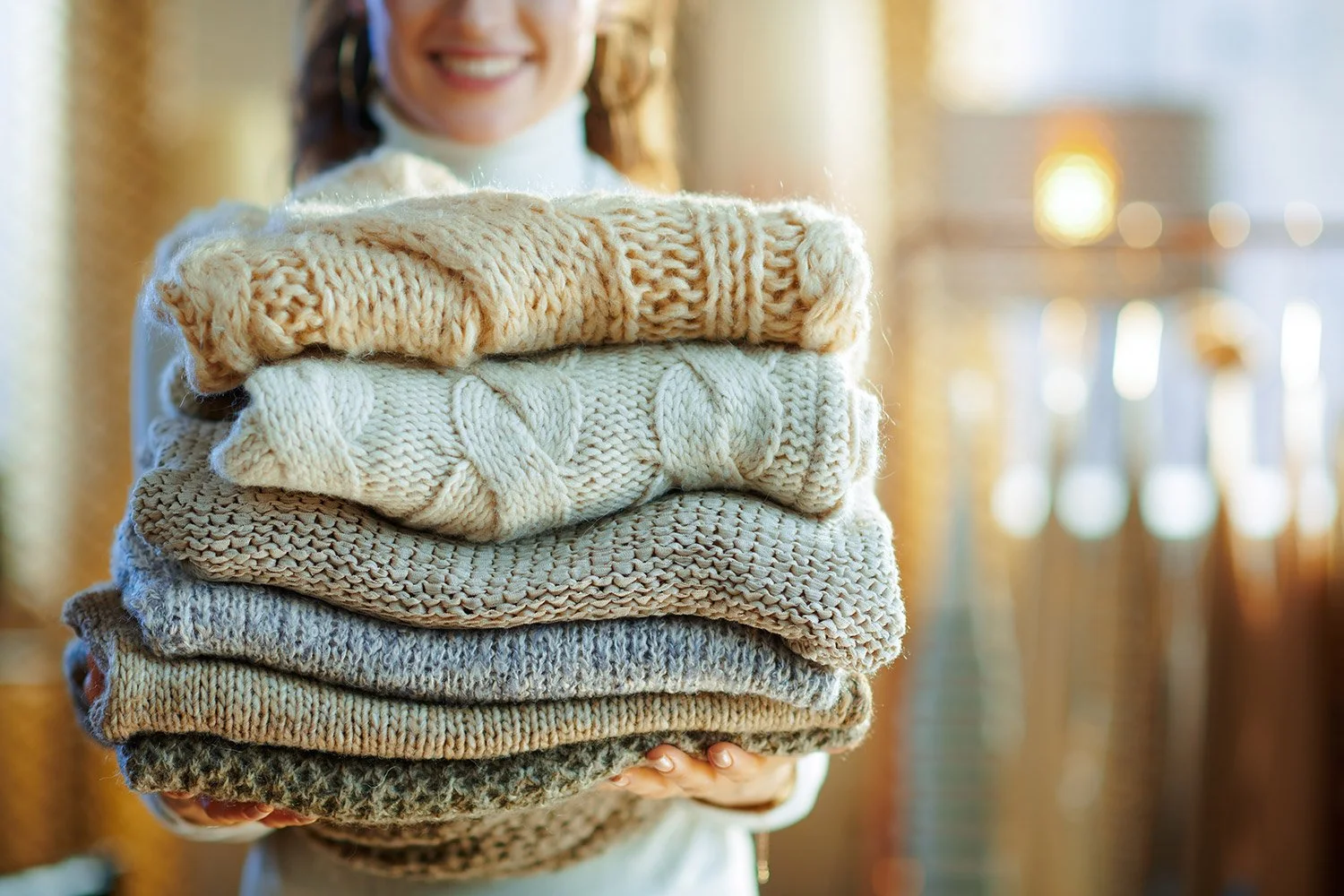
As the seasons change, so does your wardrobe. Sweaters and scarves make way for tank tops and sandals, and vice versa. But storing seasonal clothes properly is key to keeping your wardrobe organized, your clothes in good condition, and your space clutter-free. As a professional organizer, I’ve helped many clients create efficient systems for storing out-of-season clothing, and I’m excited to share my top tips and tricks for getting your seasonal storage just right.
Declutter Before Storing
Wait, read that again: declutter before storing. Just because a portion of your wardrobe will no longer take the space at the front and center of your closet, doesn’t mean you have endless amounts of space to store things that no longer serve you. I know it’s hard, but taking the time to make the hard decisions of keep, donate, or let go, is the first step in any effective seasonal clothing storage plan. Before packing away your winter wardrobe or switching out your summer clothes, take the time to evaluate what you actually wear and need. There’s no sense in storing items that no longer fit, are out of style, or you haven’t worn in years.
Action Step:
Go through your seasonal clothes and ask yourself: Does this fit? Do I wear this? Is it still in good condition?
Donate or sell any clothes that don’t make the cut.
Keep a “repair pile” for clothes that need mending before being stored or worn again. And be sure to take those clothes to be prepared before they get stored away.
Decluttering not only helps free up space but also ensures that you’re only storing what you truly love and will wear again.
Clean Everything Before Storing
Before putting your seasonal clothes away, always make sure they are clean. Dirt, oils, and even body scents can attract pests like moths, while stains can set in and become permanent over time.
Action Step:
Launder or dry clean all items before storing them. Never store clothes that are damp or wet as this can lead to mildew and unpleasant odors.
For delicate fabrics (like wool or silk), consider dry cleaning or hand washing to preserve the integrity of the material.
If possible, use a fabric freshener or mild detergent designed for delicate fabrics to ensure your clothes smell fresh when you pull them out months later.
Organize Love Pro Tip:
Store your delicate fabrics with cedar planks to help keep pests away. Many stores carry different options that can be hung, placed in bins, or kept in bins or drawers. The Container Store, along with many other local stores, have great options.
Choose the Right Storage Containers
How you store your seasonal clothes plays a major role in keeping them in good condition. The right storage containers can protect your garments from dust, humidity, and pests. Here are my top picks for different types of storage:
Plastic Bins with Lids
For most clothing items, sturdy plastic bins with airtight lids are a great option. They offer protection from dust, moisture, and insects, and they stack easily, which helps save space. Look for bins that are clear so you can easily see the contents, or use labels for easy identification.
Vacuum-Seal Bags
For soft, bulky items like jackets, coats, blankets, or sweaters, vacuum-seal storage bags are a fantastic space-saver. By removing excess air, these bags compress clothing to a fraction of its original size, allowing you to store a large volume in a small space. They also protect against mold and pests.
Recommended Product:
Ziploc Space Bag—These vacuum-seal bags are available in various sizes and are perfect for storing bulky sweaters, coats, and seasonal bedding.
Cloth Garment Bags
For clothing that needs to maintain its shape—such as suits, dresses, or coats—use breathable garment bags. Cloth bags are better than plastic for long-term storage because they allow your clothes to breathe and prevent mildew. Make sure the garment bags are large enough to allow for the clothes to hang freely.
Organize by Season, Category, and Frequency
When storing your seasonal clothes, organization is key. Make it easy to find what you need when the season rolls around again. This can be done in a few simple ways:
Store by Season
Store clothes by the season in separate bins or bags. You’ll want to keep all your summer clothes in one place and all your winter clothes in another so that when the time comes to switch, you don’t have to dig through a mishmash of clothing.
Organize Love Pro Tip:
Label your containers by season (e.g., “Winter Coats” or “Summer Dresses”) and use a color-coded system if needed. This will save time when you’re retrieving clothes for next year or that tropical vacation in the dead of winter :)
Store by Category
Consider categorizing your clothing even further within each season. For example, keep your tops, pants, and dresses in separate bins so you can easily locate what you need.
Action Step:
Label each container or bag with specific categories (e.g., “Sweaters” or “Pants”) to streamline your process when it’s time to rotate your wardrobe.
Use a Clothing Rack for Easy Access
For items you wear frequently, such as jackets, sweaters, or scarves, use a clothing rack or hooks in a closet or hallway to hang them up rather than storing them away. This gives you easy access without having to open bins or bags.
Protect Clothes from Pests
Moths and other pests love seasonal clothing, especially wool and other natural fibers. To prevent damage, use moth repellents and pest-proof storage.
Organize Love Pro Tip:
Add cedar planks or lavender sachets to storage bins and garment bags. These natural repellents keep moths at bay while also leaving your clothes smelling fresh.
For long-term storage, consider using pest-repellent storage bags or garment bags that are lined with insect-repellent material.
Maximize Closet Space for In-Season Items
When it’s time to rotate your wardrobe, make sure your in-season clothes are easy to access and well-organized. Rotating your seasonal clothing should be a regular part of your organizing routine. At the beginning of each season, swap out your clothes and take the opportunity to reassess your wardrobe. It’s easy to buy more hangers or have your closet become a dumping ground — don’t fall into the trap. Personally, I like the one in, one out rule. When I run out of hangers, I know it’s time for me to reassess what I have.
Organize Love Pro Tips:
Use slimline velvet hangers to save space and prevent clothes from slipping off.
Invest in over-the-door hooks or hanging organizers to store accessories like scarves, hats, or handbags.
Consider a closet organizer system for easy access to your everyday items.
Properly storing seasonal clothes is essential for keeping your wardrobe organized, your clothes in great condition, and your living space clutter-free. By following these tips and using the right storage solutions, you can keep your out-of-season clothes protected and easily accessible for when you need them.
Remember: the key to effective storage is not just about finding a place to put things, but about creating a system that works for you. With a little planning and the right tools, you’ll be able to rotate your seasonal wardrobe like a pro—year after year.